
What Commercial Property Owners Should Know About Waste Management Contracts
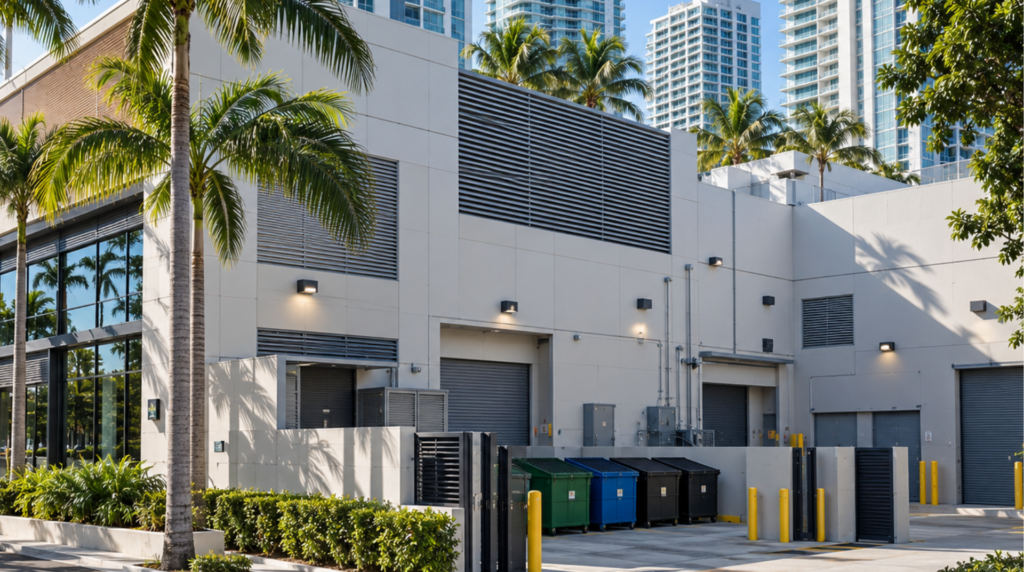
Waste removal is a routine part of operating a commercial property, but the contract behind that service can have a larger impact than owners may realize.
Pickup frequency, overage charges, cancellation terms and emergency service can all affect what a property ultimately pays. For owners with multiple properties, there is also the question of whether each location should be treated separately or whether services can be managed across the portfolio.
Taking a closer look at these details can help owners understand whether the service they are paying for still matches what their properties need.
Key Takeaways
- Waste hauling costs depend on more than the quoted rate. Pickup schedules, overage charges and contract terms all matter.
- Managing waste services across multiple properties can offer advantages over separate contracts.
- NAI Miami Fort Lauderdale reports approximately $250,000 in annual client savings through a portfolio-wide waste service arrangement.
In This Article
- Start With the Service, Not Just the Rate
- Look Beyond the Monthly Charge
- Portfolio Size Can Change the Conversation
- Where Cost Savings Can Come In
- Local Relationships Still Matter
- A Routine Expense Worth Reviewing
- Frequently Asked Questions
Start With the Service, Not Just the Rate
It can be tempting to compare waste providers based on the quoted hauling rate alone. That does not always show the full cost.
The U.S. Environmental Protection Agency’s ENERGY STAR guidance for commercial buildings notes that waste hauling contracts often specify a pickup frequency, with costs calculated around that schedule. This makes service frequency an important place to start.
A property that has changed tenants, occupancy levels or operating patterns may no longer need the same schedule it had when the contract was signed. On the other hand, a property regularly exceeding its container capacity may face additional pickups or overage charges.
Reviewing actual usage alongside the contract can help determine whether the current service is still appropriate.
Look Beyond the Monthly Charge
There are several other parts of a waste agreement worth reviewing.
Overage charges are one example. Owners should understand what constitutes an overloaded container, how frequently those charges occur and how they are calculated.
Cancellation provisions also matter. A standardized agreement with clear cancellation terms can give an owner more flexibility if service requirements change.
Then there are the less predictable situations. If a property suddenly requires an additional pickup, having an established process for arranging emergency service can make a practical difference to day-to-day operations.
These may seem like relatively small contract details, but across a large property or portfolio, they can add up.
Portfolio Size Can Change the Conversation
Owners with multiple properties may have another option to consider: managing waste services as a portfolio rather than through a collection of individual contracts.
NAI Miami Fort Lauderdale, which provides commercial property management services in South Florida, has a long-standing relationship with a national waste service provider that supports approximately 2 million square feet of managed property. Rather than approaching each property as a separate account, services are managed through a broader portfolio relationship.
That arrangement provides a single senior account contact, standardized contracts and consideration for overloaded container charges and other portfolio incidents. It also provides access to emergency pickups and services when required.
The benefit is not simply convenience. Managing multiple properties together can give the property management team a clearer view of service requirements across the portfolio and create a more consistent approach to contracts and vendor communication.
Where Cost Savings Can Come In
Cost is still an important part of the equation.
In the NAI Miami Fort Lauderdale example, the portfolio arrangement has delivered reported savings of 25% to 30% compared with standard waste hauling service rates. Across the approximately 2 million-square-foot portfolio, that equates to around $250,000 in annual client savings.
Those results are specific to this portfolio and its vendor relationship, but they demonstrate why waste services are worth reviewing rather than treating them as a fixed operating expense.
ENERGY STAR similarly recommends tracking waste as a way to understand what a property is actually using. Its guidance notes that better waste data can help organizations negotiate services that more closely match their requirements and potentially reduce disposal costs. The EPA also provides a broader guide to managing and reducing waste in commercial buildings, including ways properties can reduce the amount of material requiring disposal.
The opportunity will differ by property. The useful question is whether the current contract, service frequency and associated charges still make sense.
Local Relationships Still Matter
National vendors can provide coverage across a broad portfolio, but there is still value in having people who understand the properties and the local market managing that relationship.
“A lot of it comes down to local relationships. I’ve been dealing with the same representative for 20 years, and that can create opportunities that aren’t available in every market.”
– Jeff Buell, Director of Property Management, NAI Miami Fort Lauderdale
A property manager can monitor service at the property level, identify recurring issues and communicate with the vendor when requirements change. Over time, that history can also make contract discussions more informed because decisions are being made with an understanding of how the properties operate.
For owners, particularly those with several properties or assets in different locations, that can reduce the amount of vendor coordination that needs to be handled internally.
There is a time-saving element to this as well. Fewer vendor relationships, invoices, service issues, and contract discussions can mean less time spent managing routine operational tasks. In property management, time is another cost worth considering.
A Routine Expense Worth Reviewing
Waste hauling is unlikely to be the largest expense on a commercial property’s operating budget. Other line items, including property insurance, can have a much greater impact on overall operating costs. But that does not mean it should run on autopilot.
Service frequency, contract terms, overage charges, emergency requirements and portfolio structure can all influence the final cost. Periodically reviewing those areas can help owners determine whether they are receiving the right level of service and paying appropriately for it.
For owners with multiple assets, there may also be value in looking beyond each individual property and considering whether a more coordinated approach makes sense across the portfolio.
NAI Global property management professionals work with owners to oversee vendors, contracts and day-to-day property operations across markets. Learn more about NAI Global Property Management.
Frequently Asked Questions
What should commercial property owners review in a waste management contract?
Owners should look beyond the base hauling rate and review pickup frequency, container requirements, overage charges, cancellation provisions, emergency services and any additional fees included in the agreement.
Can a commercial property reduce its waste hauling costs?
Potentially. Savings will depend on the property, its service requirements and the available vendors. Reviewing pickup frequency, actual usage, contract terms and additional charges can help identify areas where the service may be adjusted.
How can property managers help with waste management contracts?
Property managers can monitor how services are being used, coordinate with vendors, review contract terms and identify recurring charges or service issues. They can also help owners assess whether services should be negotiated at the individual property or portfolio level.
What are waste overage charges?
Overage charges can apply when a container exceeds agreed service conditions, such as being overloaded. The definition and cost will depend on the individual waste services agreement, so owners should review how these charges are addressed in their contracts.
Does it make sense to combine waste services across multiple properties?
It can, depending on the portfolio and available providers. A portfolio arrangement may allow for more consistent contracts, centralized vendor communication and coordinated service, but the right structure will depend on the locations and requirements of the individual properties.
How often should a commercial waste contract be reviewed?
There is no single schedule that applies to every property. A review can be useful when occupancy, tenant mix, waste volume or operating requirements change, as well as ahead of a contract renewal.