
What Warehouse Management Involves and Why It Matters for Property Operations
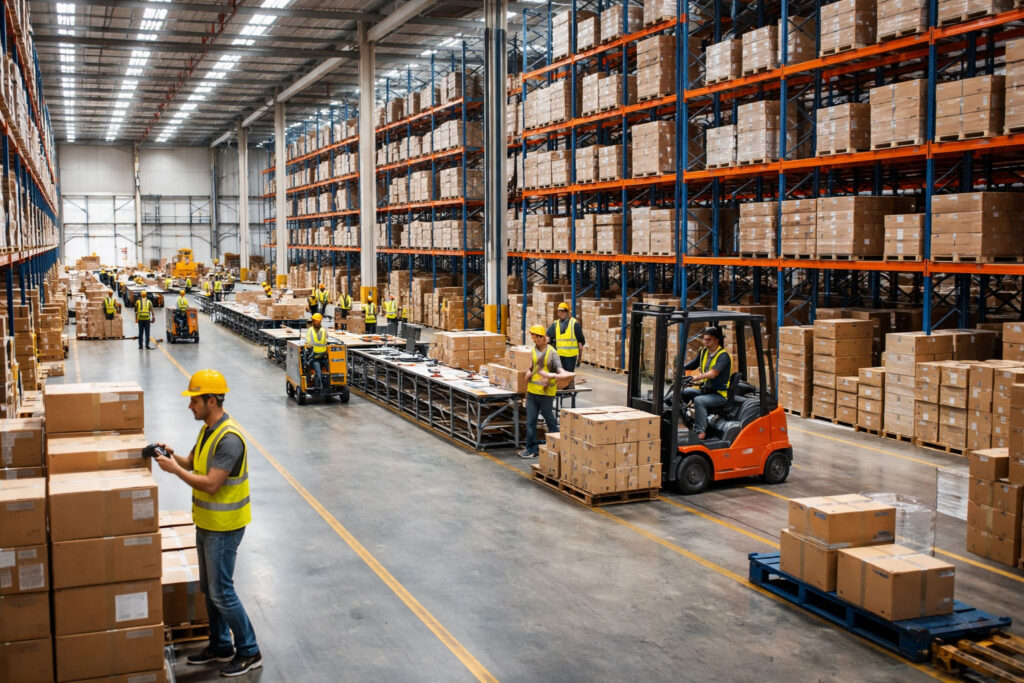
Warehouse management covers the systems, workflows, people, equipment, and physical space required to keep the operations of industrial storage and logistics buildings running efficiently and accurately. In a commercial real estate setting, it can refer to both the day-to-day activity inside a warehouse and the broader management of industrial space that supports tenant performance.
For property owners and investors, warehouse management is closely tied to how a building performs over time. Layout, maintenance, dock coordination, and building systems all influence how efficiently tenants can operate and how well an asset holds its value.
What is warehouse management in a commercial property context?
Warehouse management is the coordination of inventory, storage, labor, workflows, safety, equipment, and facility use within a warehouse environment.
In practical terms, this includes:
- Receiving and unloading goods
- Putaway and storage allocation
- Inventory tracking and cycle counting
- Order picking and packing
- Shipping and outbound logistics
- Returns processing
- Dock scheduling and coordination
While these functions are often managed by tenants, the building itself plays a critical role in how efficiently and effectively these daily functions flow. Things like circulation paths, dock access, lighting, floor loads, and maintenance standards all influence the ease and speed at which these activities can happen.
This is where property operations intersect with tenant performance. Well-managed facilities support smoother workflows, fewer disruptions, and more consistent outcomes which ensure a more predictable and profitable bottom line.
Why is warehouse management important today?
Warehouse performance has become more visible as customer expectations around delivery continue to rise.
Metapack’s 2026 Ecommerce Delivery Benchmark Report shows that delivery cost is now the top priority for consumers at 36%, ahead of speed at 23% and convenience at 17%. That puts pressure on tenants to operate efficiently, but it also places new demands on the buildings themselves.
Facilities need to support faster throughput, reliable dock operations, and consistent performance across peak periods. For property owners, warehouse management is no longer a background function, it is part of how an asset supports tenant performance and remains competitive in the market.
What are the main functions of warehouse management?
Warehouse management includes a set of core functions that work together to move goods efficiently through a facility.
Receiving and putaway
The process begins when goods arrive at the warehouse. Efficient receiving and accurate putaway ensure inventory is available quickly and correctly positioned for downstream activity.
Storage and inventory tracking
Effective storage balances space utilization with accessibility. Inventory systems help maintain accuracy, reduce errors, and support better decision-making.
Order picking and packing
Order picking and packing are often the most labor-intensive parts of warehouse operations. Travel time, product placement, and workflow design all influence how efficiently orders can be fulfilled.
Shipping and dock coordination
Outbound logistics depend on well-managed dock areas and scheduling. Delays or congestion at the dock can slow the entire operation.
Returns management
Returns require space, labor, and coordination. Poorly managed returns processes can quickly create inefficiencies within a facility.
The success of each of these functions is influenced by how the building is configured and maintained.
How does warehouse layout affect performance?
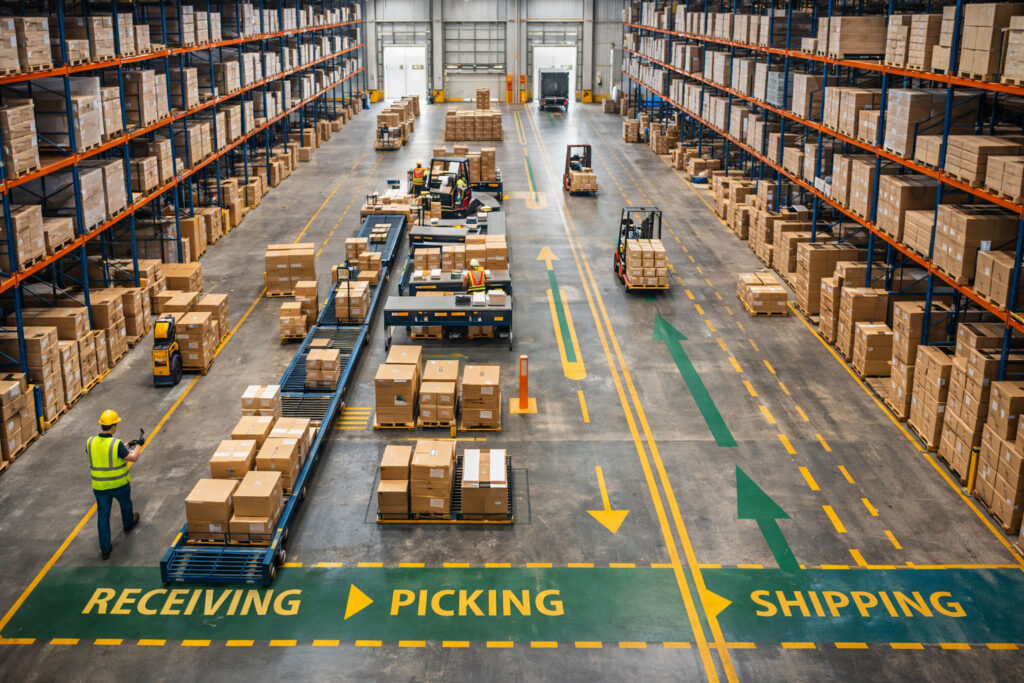
Warehouse layout has a direct impact on efficiency, safety, and cost.
A well-designed layout supports:
- Clear separation of inbound and outbound activity
- Efficient traffic flow for people and equipment
- Logical product placement
- Adequate staging space
- Safe working conditions
Product placement also plays a role. In many operations, a small percentage of products account for a large share of activity. Placing faster-moving items closer to packing and shipping areas reduces travel time and improves throughput.
For property operations, layout affects more than productivity. It influences wear on the building, congestion at key points, and the overall usability of the space. In the MHI Annual Industry Report 2025, one warehouse case study reported reclaiming 10,000 square feet and managing 80% of inventory in just 5% of overall space, which shows how significantly layout and storage design can affect facility performance.
How does warehouse management improve operational efficiency?
Warehouse management improves efficiency by reducing unnecessary movement, improving accuracy, and making better use of space and labor.
This can include:
- Organizing inventory based on demand patterns
- Streamlining receiving and shipping processes
- Improving visibility into stock levels
- Supporting better labor planning
- Maintaining consistent facility conditions
Even small inefficiencies can compound over time. When workflows are aligned with the building and properly supported, operations tend to run more smoothly and predictably.
This is especially important as warehouse operations become harder to staff. The MHI Annual Industry Report 2025 found that 52% of companies see hiring and retaining workers as a major challenge. For property owners, that raises the value of facilities that support efficient movement, clearer workflows, and stronger operational visibility.
What technology is used in warehouse management?
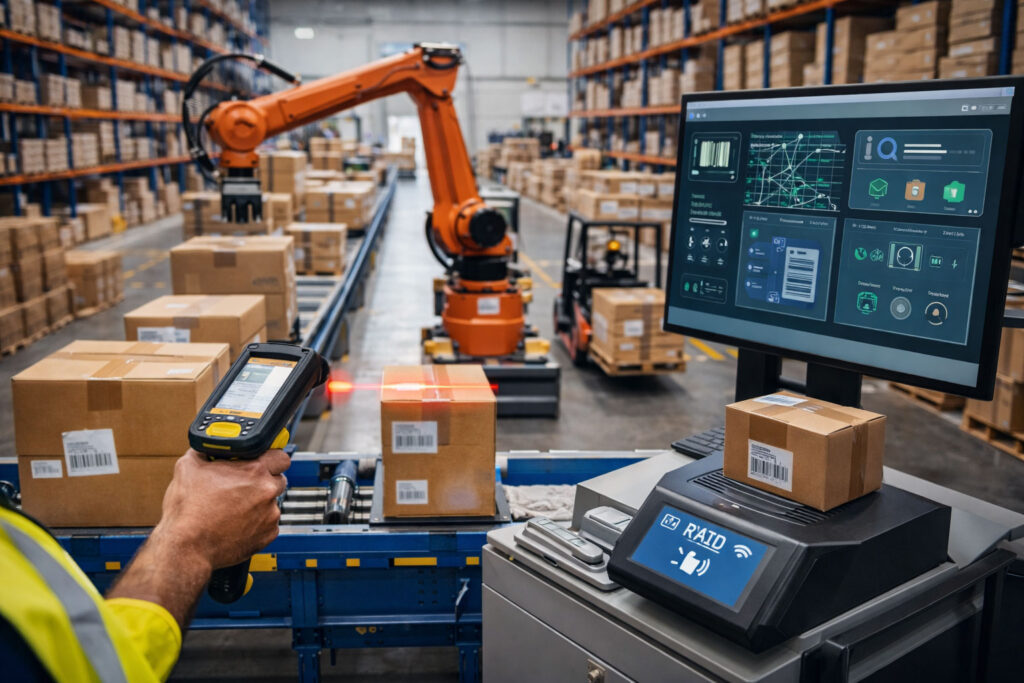
Technology plays an increasing role in warehouse operations, particularly as tenants look for greater visibility and control.
Common tools include:
- Warehouse management systems (WMS)
- Barcode scanning and mobile devices
- RFID tracking
- Automation and material handling systems
- Real-time reporting platforms
For property operations, this means facilities need to support modern systems and infrastructure that align with evolving tenant requirements.
What is the role of a warehouse management system?
A warehouse management system helps organize inventory, guide workflows, and provide visibility into operations.
It can:
- Track inventory locations in real time
- Improve picking accuracy
- Support barcode-based workflows
- Provide reporting on performance metrics
- Help identify inefficiencies
While technology improves visibility and control, it works best when paired with a facility that supports efficient movement and safe operations.
How does warehouse management connect to property performance?
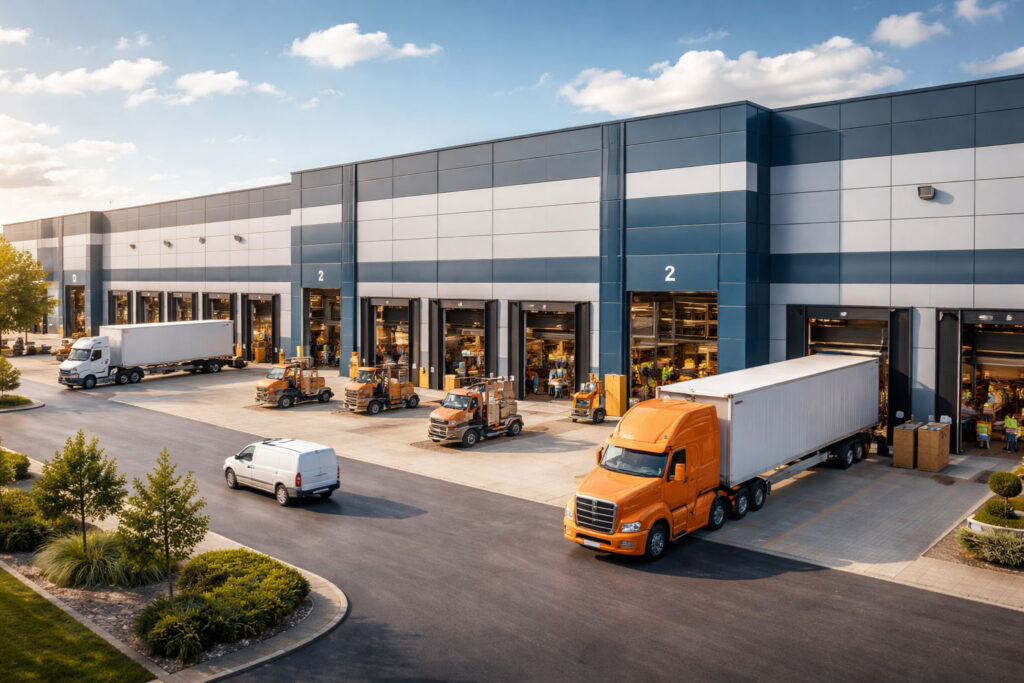
Warehouse management directly influences how a property performs.
Efficient operations can support:
- Stronger tenant satisfaction
- More consistent occupancy
- Reduced operational disruptions
- Better maintenance outcomes
- Improved long-term asset value
Inefficiencies, on the other hand, can lead to increased wear, higher operating costs, and tenant turnover.
For owners managing industrial portfolios, aligning property operations with tenant needs is essential. This is especially relevant for multi-market portfolios, where consistency and local execution both play a critical role in ensuring long term success for the asset. Learn more about how this approach is applied across assets through NAI Global Property Management services.
How does property management support warehouse operations?
While tenants manage their own operations, property management plays a supporting role in how effectively a warehouse functions.
This includes:
- Maintaining building systems and infrastructure
- Coordinating vendors and preventative maintenance
- Supporting safe and compliant environments
- Managing common areas and shared access points
- Providing consistent reporting and oversight
NAI Global Property Management delivers these services through a network of locally owned firms supported by shared standards and best practices. This model combines local market knowledge with a consistent approach to service delivery across markets.
For owners evaluating operational performance or considering changes to their management approach, connecting with a team that understands both property operations and tenant needs can provide useful perspective. You can explore that further by starting a conversation with NAI Global Property Management.
FAQ: Warehouse Management in Commercial Property Context
What is warehouse management?
Warehouse management is the coordination of inventory, storage, labor, workflows, equipment, and facility use to ensure goods move efficiently and accurately through a warehouse.
What does warehouse management involve?
It involves receiving, putaway, storage, inventory tracking, picking, packing, shipping, returns, and dock coordination, along with the facility conditions that support those activities.
Why is warehouse management important?
It affects operational efficiency, tenant performance, and customer experience. Faster, more reliable warehouse operations support stronger business outcomes and more competitive properties.
What are the main functions of warehouse management?
The main functions include receiving, storage, inventory tracking, order fulfillment, shipping, returns, and dock management.
How does warehouse management improve operational efficiency?
It improves efficiency by reducing travel time, improving accuracy, optimizing space, and aligning workflows with facility design.
What technology is used in warehouse management?
Common technologies include warehouse management systems, barcode scanning, RFID tracking, automation systems, and reporting tools.
How does warehouse layout affect warehouse performance?
Layout affects movement, safety, and throughput. A well-planned layout reduces congestion, improves workflow, and supports faster operations.
What is the role of a warehouse management system?
A WMS helps track inventory, guide workflows, improve accuracy, and provide visibility into warehouse performance.