
How to Run an Initial Solar Assessment on Your CRE Portfolio
Rooftop solar leases present a valuable opportunity to increase NOI and contribute to sustainability goals. However, not every property is a suitable candidate for a solar installation.
In this blog, we explore the key considerations for identifying ideal locations for solar projects, assessing roof conditions, and selecting the right partner to ensure the success of your solar initiative. We’ll also discuss how fund structures and stakeholder interests can influence your decision-making, helping you focus on the most viable opportunities in your portfolio.
Ideal Markets
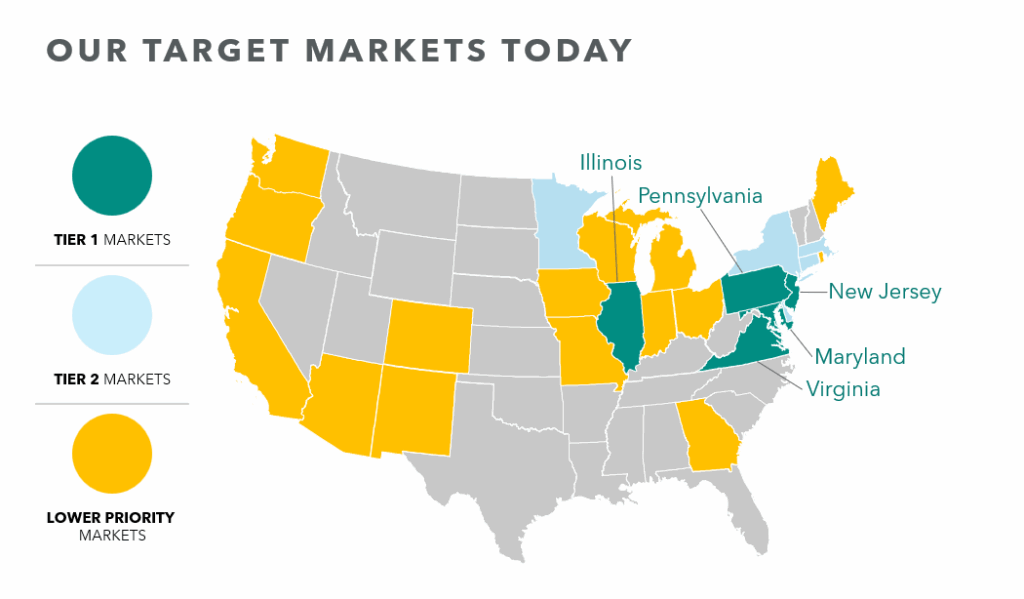
Solar programs and incentives vary significantly by state, making it crucial to focus on regions with robust policies and favorable conditions. Additionally, the support for solar grid interconnection by Electric Distribution Companies (EDCs) varies by region due to a combination of regulatory, financial, and logistical factors.
In many states, behind-the-meter solar (BTM) is viable, but as we’ve mentioned in previous posts, BTM is more complex and less lucrative to real estate owners. There are, however, a growing number of states where front-of-the-meter (FTM) solar is viable. These states include New Jersey, Maryland, Pennsylvania, Illinois, and Virginia.
Roof Conditions
- Roof Size
Ideally, rooftops should exceed 30,000 square feet to accommodate the scale necessary for an economically viable solar installation. For commercial and industrial real estate portfolios, prioritizing properties with significant rooftop square footage helps to maximize the financial benefits of the rooftop lease. - Roof Age
Roofs that are less than 7 years old or in need of replacement are ideal for solar. Roofs under seven years old tend to be preferred due to their remaining lifespan, which aligns well with the typical 20-year term of a solar lease. For properties in need of a roof replacement, roof lease payments are often used to fund the replacement, creating a win-win scenario for CRE owners. - Roof Type
The type of roof also plays a key role in determining solar feasibility. Both flat and pitched roofs are viable for solar projects, but flat roofs are often preferred due to easier installation and maintenance access. Properties no higher than 3-4 floors are generally more suitable for solar installations, as they simplify logistics and reduce costs associated with equipment like cranes or scaffolding, needed to access the roof.
Read More
The extended blog article on Solar Landscape’s website covers additional points like,
- Real Estate Fund Structure
- Stakeholder Considerations
- Partner Selection
Read more here.