
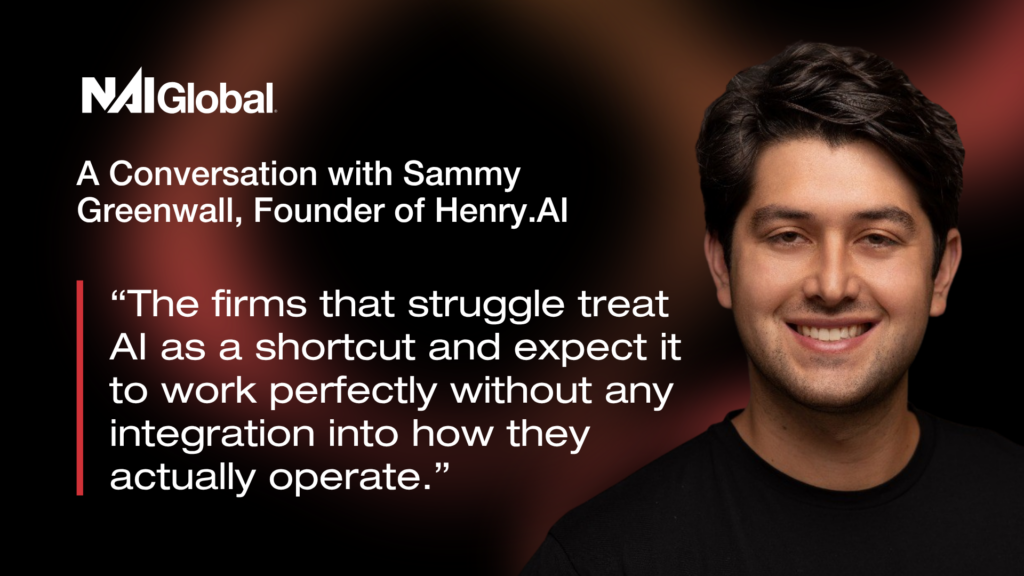
A Conversation with Sammy Greenwall, Founder of Henry.AI
AI is rapidly changing how commercial real estate professionals work, but the most valuable tools are often the ones that solve practical business challenges. Henry.AI is built specifically for the industry, helping brokers automate the creation of BOVs, offering memorandums, presentations, maps, and other deal materials while maintaining the quality and branding standards their clients expect.
We sat down with Henry.AI Founder Sammy Greenwall about the inspiration behind the platform, how AI is reshaping brokerage operations, what separates successful AI adopters from the rest of the market, and where he believes the technology will have the greatest impact on commercial real estate in the years ahead.
What sparked the idea for Henry.AI?
Honestly, it started with getting yelled at late at night as an analyst at Toll Brothers because the decks I was building for deals weren’t good enough. I was working as hard as I could, but the bar for presentation quality in this industry is extremely high and the tools available to produce that work were terrible. Years later, when I looked at what AI could do, the first thing I thought about was that analyst version of me drowning in production work that had nothing to do with actual deal-making. I built Henry because I knew exactly what that pain felt like, and I believed we could fix it.
Now, we’re producing several thousand decks per month, and we work with three national brokerages at the corporate level. Our customers tell us they save an average of 14 hours per deck and get deals out to market 1.5 days faster. That’s a structural competitive advantage. Brokers are going after opportunities they would have passed on before simply because the production cost was too high. The platform changed their calculus.
A lot of brokers care deeply about their firm’s brand and style. How does Henry make sure a deck still feels personal and on-brand?
This is where vertical focus matters enormously. Generic AI tools produce what I’d call AI slop, or content and design that looks like it came from a startup in Silicon Valley, not a CRE firm. Real estate design has its own language, its own aesthetic sensibility, its own standards for what a professional presentation looks like. Henry was built for that world specifically. We adapt to each firm’s brand identity, templates, and tone, and we understand CRE design in a way that a general-purpose tool simply doesn’t. The goal is that the output looks like it came from the broker and the firm because in every meaningful sense, it did.
Where are you investing next: deeper product capabilities, broader workflows, or tighter integration into brokerage operations?
Deeper product capabilities are the priority right now, specifically around the intelligence layer. Henry already handles comp maps, amenity maps, underwriting updates, and deal-specific market narratives natively. We’re extending that further so that Henry isn’t just executing on a brief, but actively helping brokers frame the right story for a given asset and market. Alongside that, we’re investing in tighter integration into the operating stack. The goal is for Henry to live inside the tools brokers already use; not be another application they have to switch to.
From a leadership standpoint, what differentiates firms that successfully adopt AI from those that struggle to get real value?
The firms that win start with a specific problem, not a technology trend. They adopt AI because their brokers are losing 14 hours a deck on production work that has nothing to do with deal-making, and they want that time back. They invest in the change management piece and create internal champions. The firms that struggle treat AI as a shortcut and expect it to work perfectly without any integration into how they actually operate. The ones willing to spend a few weeks doing it right are the ones who see the results.
Where do you think AI can have the biggest impact on commercial real estate over the next few years?
The document production layer is just the beginning. The next frontier is deal intelligence — helping brokers understand market dynamics faster, surface the right demand drivers for a specific asset, and anticipate what a buyer or tenant is going to care about before the first conversation. We’re already starting to move in that direction with how Henry handles comps and market narratives. Overtime, I see AI becoming a genuine strategic partner in the deal process, not just a production tool. The firms building those capabilities into their workflows now will have a real edge in the market.