
A Conversation With REPEAT Top Producer Nathan Anderson
You’ve been in the industrial real estate business for more than 25 years. What has kept you motivated and excited about the work over that time?
What has kept me motivated over the last 28 years is the thrill of winning. Commercial real estate is one of the most challenging and competitive industries out there, and I’ve always been extremely competitive. I take pride in putting in the work every day to give myself the best opportunity to win the deal.
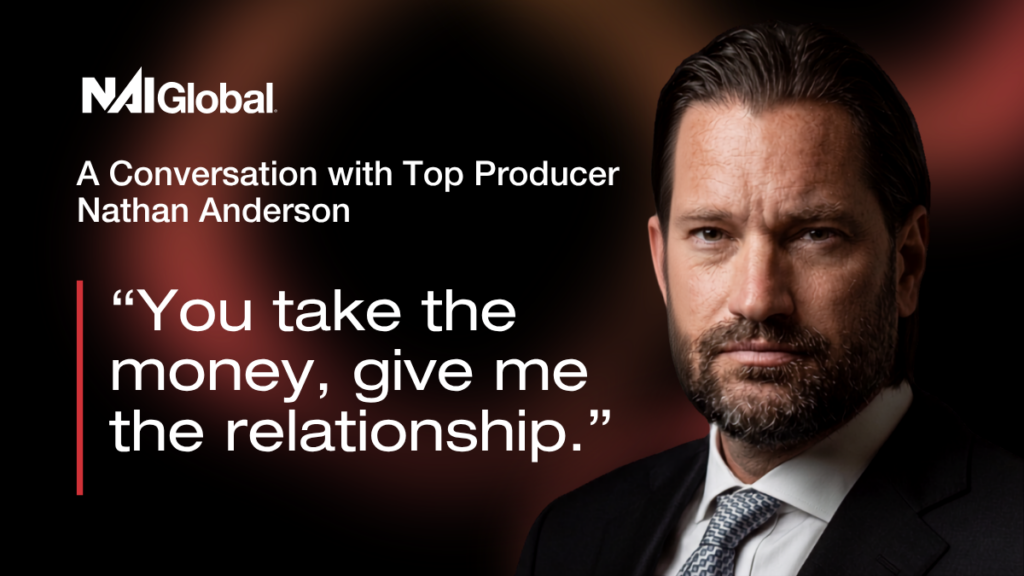
I’ve also been fortunate to have a mentor who held me accountable, not just to show up every day (and I mean every day), but to stay focused and make every hour productive. If I could offer one piece of advice to young professionals in commercial real estate, it would be to put the relationship before the money. My mentor always said, “You take the money, give me the relationship.” That philosophy has shaped the way I approach every transaction and continues to guide how I do business today.
You and Darren Butler, Managing Director at NAI Brannen Goddard, were NAI Global’s number one team last year. What has made that partnership so successful, and what have you learned from working together over the years?
Darren and I have been a successful team for a lot of reasons. First and foremost, we’re best friends. We genuinely care about each other and always want to make sure we’re looking out for one another.
The other key reason is that our skill sets complement each other really well. Darren is the best closer I’ve ever seen in business. My strength is more on the relationship-building and business development side, although Darren is great at that too. Together, we’ve been able to play to each other’s strengths, and that’s been a big part of our success.
You’ve completed more than 2,500 transactions throughout your career. What are some of the biggest lessons you’ve learned from working with such a diverse client base?
One of the biggest lessons I’ve learned is to listen to your clients’ needs and not project your own opinion about what you think the outcome of a transaction should be. First, you need to have a complete understanding of what’s most important to the client. Once you have that, you can help guide them toward the right solution.
Atlanta continues to be one of the country’s most active industrial markets. What trends are you watching most closely right now, and what do they mean for occupiers and owners?
The biggest trend we’re seeing is that tenant demand has begun to outpace new construction. That imbalance is creating a much more competitive environment for tenants trying to secure space, and it’s pushed rental rates to historic highs.
The industrial sector has also changed dramatically over the last several years. Tenants have less leverage than they once did and, with demand continuing to outpace available inventory, they have to make business decisions much more quickly. For owners, it’s created a much stronger leasing environment.
I’m also excited to see how the data center boom competes with local Atlanta industrial developers. Atlanta is running out of quality sites, so it will be interesting to see how that competition for land shapes the market going forward.
Is there a recent transaction you’ve worked on that you’re particularly proud of or excited about? What made that deal stand out?
One recent transaction I’m especially proud of involved a 300,000-square-foot building that Darren and I worked on over an 18-month period. During that time, we completed four separate transactions. First, we sold the land to a developer. Next, we sold the shell building to an investor. We then leased the building to a long-term tenant on behalf of that investor. Finally, we sold the fully leased building to another investor.
It was incredibly rewarding to be involved in every stage of the property’s lifecycle, from the initial land sale through the final investment sale. That made the transaction especially memorable.